
99 Luftballons

Dear Gen Xer,
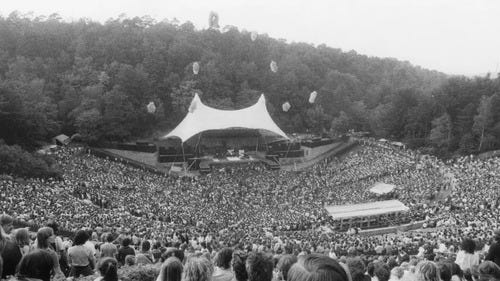
It was June 8, 1982, in the enclave known as West Berlin. Thousands of fans had packed the Olympiapark Waldbühne amphitheater to see The Rolling Stones. They’d opened their set with Under My Thumb, then ripped through 24 classic tracks, winding up an epic show with a legendary encore of (I Can’t Get No) Satisfaction. As Mick and the boys blazed to a finish, helium balloons arose from the stage.
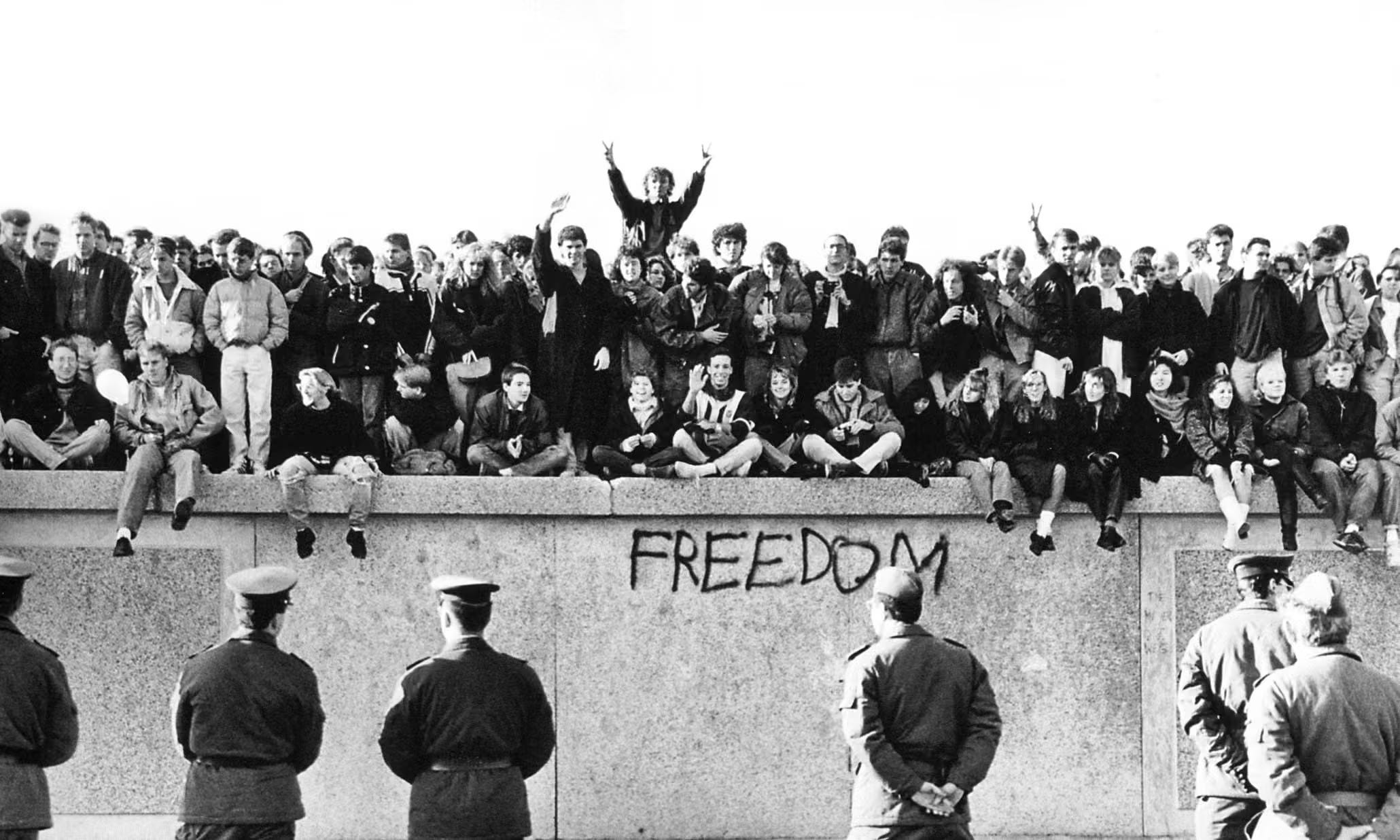
A young musician named Carlo Karges was in attendance that summer evening. He watched as the balloons floated up high into the darkened sky. He knew the balloons could be easily seen from the other side of the city, and wondered what might happen as they floated across the 96-mile, 13-foot wall that divided Berlin into East and West.
The balloons looked a little like UFO’s, spherical machines from a distant planet. Karges imagined what the leaders of Soviet-ruled East Berlin would do if they believed they were under attack by aliens. Even worse: enemy aircraft.
Karges envisioned frantic calls placed to the Kremlin; heated accusations between East and West; missile launches; nuclear war. Thoughts of global annihilation haunted him all the way home.
The words flowed quickly.
Karges shared them with his bandmates the following day. First to read them was lead singer Gabriele Kerner, who’d accompanied Karges to The Rolling Stones. The lyrics she read moved her to tears. The rest of the band was equally impressed. They spent the rest of their rehearsal that day working on the song.
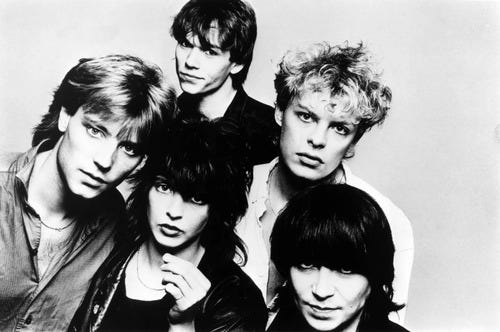
The band had formed the year before. Kerner had moved to West Berlin with drummer boyfriend Rolf Brendel. Karges joined them on guitar. Jürgen Dehmel played the bass, while Uwe Fahrenkrog-Petersen worked the synths and keys. They called themselves ‘Nena’ after Kerner’s childhood nickname: a Spanish term of endearment meaning ‘little girl’.
Unlike its bizarro twin in the east, West Berlin in the early 80’s was alive with art and counterculture, with the beat of the city’s latest craze: Neue Deutsche Welle. It was a blend of new wave, post-punk, and electronic sounds—a fun and rebellious type of music that reflected the attitude of West Berliners during a period of anxiety and division.
Enter 99 Luftballons.
The song tells a story of power and destruction.
99 balloons are mistaken for UFO’s. A military general instructs a squad to fly up and investigate. 99 planes, manned by pilots who fancy themselves ‘Captain Kirks’, intercept the harmless balloons and respond with a dazzling show of firepower. This prompts 99 war ministers, eager to capitalize on the spoils of war, to match the unrestrained show of force with ordinance of their own. The result is 99 years of war, which ends in utter devastation and without a victor in sight. Gone are the planes, the ministers, and pilots. All that remains is a lone balloon, which the narrator discovers amongst the rubble. She releases the balloon into the air, thinking of you, of whoever’s still out there.
The strength of the song lies in its irony, in its infectious ability to marry the morbid subject of war with the innocence of a child. It juxtaposes the whimsy of balloons with the palpable fears of the Cold War era: the fear of overreaction, of nuclear holocaust, the end of the world as we know it.
France, the US, and the UK occupied West Berlin at the time. America had recently placed missiles there, heightening tensions with Soviet Russia. The rise and fall of the song’s melody, the floaty quality of the final verse, evoke the sense of a nursery rhyme while underscoring the carnage of war, the terror of entrusting the security of the world in the hands of reckless and irrational leaders, who paint themselves as strongmen in their own perverted narrative.
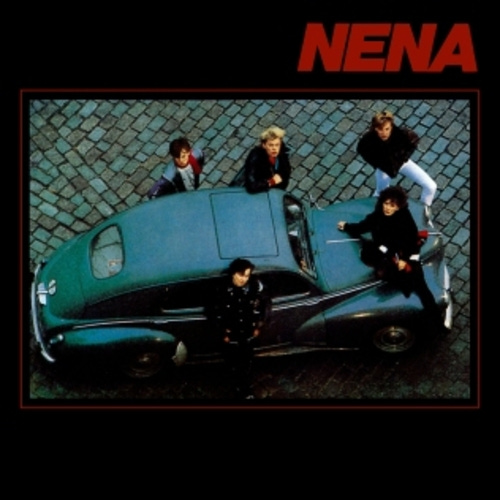
99 Luftballons appears on Nena’s self-titled debut album.
Nena was released in January 1983 and went straight to the top of the album charts in Germany, Austria, and the Netherlands. But 99 Luftballons wasn’t the first single off the album. That honor went to Nur geträumt (Only Dreamed).
Nur geträumt did little in terms of sales. But an appearance on the popular show Musikladen introduced Nena to a wider audience. The band made such an impression on viewers that 40,000 copies of the single were sold the following day.
Two months later, Nena was ready to release their second song. As unbelievable as it may sound now, 99 Luftballons had originally been slotted as the album’s third single. But their record company, CBS, disagreed, and the band eventually relented.
99 Luftballons hit #1 in Australia, New Zealand, and a number of countries in Europe. It also claimed the top spot on the Eurochart Hot 100.
Across the pond in America, a DJ in California named Rodney Bingenheimer played the song on a regular basis. It was a hit with his massive audience and caught the attention of competing stations. Suddenly 99 Luftballons was on the air throughout the country. With zero promotion from CBS, the song climbed all the way to #2 on the Billboard Hot 100, nestling right behind Van Halen’s Jump.
The British weren’t interested.
The German hit that had taken the world by storm fell on deaf ears in the UK. The lukewarm response prompted CBS to have Nena record an English version of their song. It was a cash grab, pure and simple: one that the band reluctantly agreed to.
CBS hired Irish lyricist Kevin McAlea, who’d worked with Kate Bush and David Gilmour. A strict translation of the lyrics into English made little sense, so McAlea re-worked the narrative in an effort to capture the feel of the words. The biggest change came in the title itself. ‘Luftballons’ means ‘air balloons’ in German. It was McAlea who changed them to red—a color associated with communism and the Soviet Union.
The move by CBS paid off handsomely. 99 Red Balloons shot to #1 on the UK, Irish, and Canadian charts. But it’s the German version that continued to resonate with listeners around the world. The same rang true for viewers of MTV. 99 Luftballons was placed on heavy rotation: a decision that parlayed into one million sales of Nena’s single and 360,000 copies of their album.
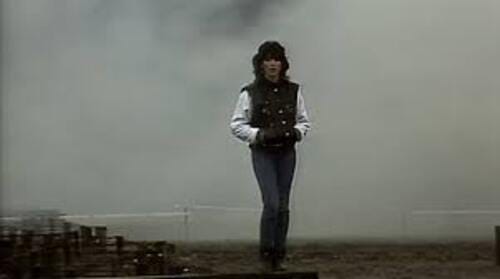
Nena broke up in 1987.
Carlo Karges, the guitarist who penned their biggest hit, passed away in 2002. But Nena, the singer, continues on. She launched her solo career in 1989 and has thus far released 13 albums, the most recent of which came out in 2020.
Nena is currently working on new material and will embark on another tour this coming May. She still ends every show with the hit that put her band on the map and vows to continue playing it as long as audiences want to hear her sing.
The anxiety and division that ruled the Cold War have once again reared their ugly heads. But Nena’s mantra remains a simple one: alles wird gut (everything will be fine). Her hope for peace and happiness continues to float up high like a helium balloon.
I love hearing about the background of these iconic songs, thank you, Sonny! 🤘
I grew up with the German version, and always thought the translation was lesser.
Great recounting of that song. I always think of the movie Atomic Blonde every time I hear it now. For me that was an incredible time in history. I was fortunate enough to be with AC/DC at the concert at the Tushino Airfield. That will always be the epitome of concerts for me considering what was happening historically there as well as the concert itself. So many lights on the runway and I couldn’t see the back of the crowd. The press said 500k but I would bet there were a hell of a lot of more than that. I’ve never seen anything to compare…ever.